
Sab Kuch Milega: Riding a Motorcycle to the Roof of the World
- Home
- /
- BLOG
- /
- BIKE STUFF
- /
- SAB KUCH MILEGA: RIDING A MOTORCYCLE TO THE ROOF OF THE WORLD
In India, people say “sab kuch milega” — everything is possible. It is a philosophy as much as a phrase, a belief that the impossible is merely a matter of commitment. Nowhere does that idea feel more literal than in the Indian Himalayas, where roads climb to altitudes that seem to belong to aviation rather than motorcycling, and where the air grows so thin that internal combustion engines — and human lungs alike — have to work harder just to keep going.
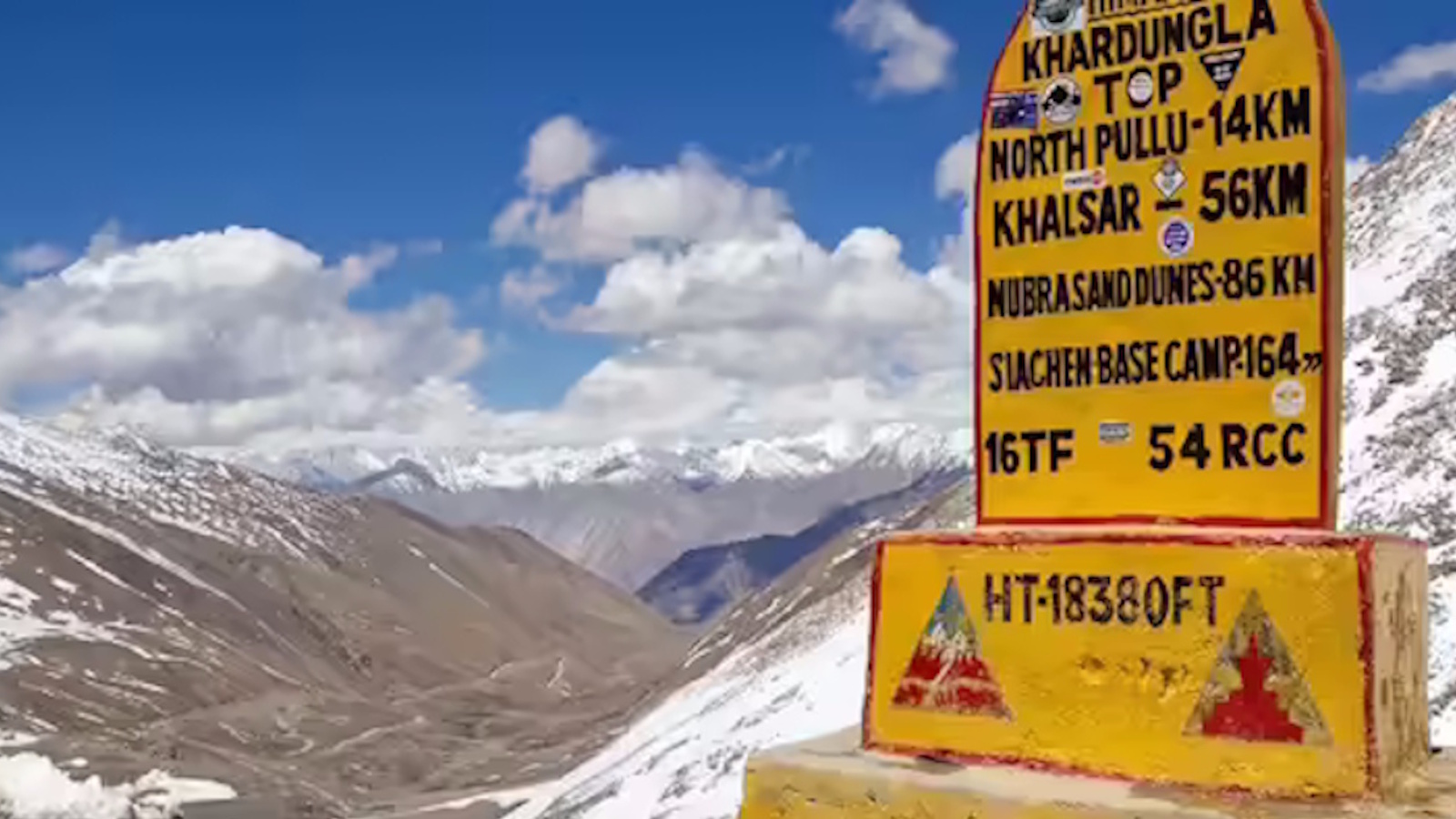
Blue Strada’s Himalayan Motorcycle Tour is 11 riding days, 1,800 kilometers, and 14 days across one of the most remote and spectacular landscapes on the planet. From the heat and chaos of New Delhi to the glacial silence of Pangong Tso lake at 4,225 meters. From the medieval monasteries of Spiti Valley to the summit of Khardung La — the highest motorable road in the world, at 5,602 meters above sea level.
This is not a tour. It is an expedition.
The Motorcycle: Royal Enfield Himalayan 410
The choice of motorcycle matters enormously in terrain like this, and the answer here is exactly right: the Royal Enfield Himalayan 410 — a purpose-built adventure motorcycle designed specifically for the roads, passes, and conditions of the Indian subcontinent.
The Himalayan 410 is not a heavy, complex machine. It is honest, robust, and at home on broken mountain roads where a larger bike would be a liability. Its long-travel suspension handles the unpredictable surfaces of high-altitude passes; its 411cc single-cylinder engine breathes well at altitude; its upright ergonomics keep you comfortable over long days in the saddle. Royal Enfield has manufactured motorcycles in India since 1955 — they know these roads in a way few others do. The Himalayan is the product of that knowledge.
Each participant has their own bike for the duration of the tour. A support van carries luggage and provides mechanical backup throughout, staffed by a dedicated mechanic who travels with the group for the entire expedition.
The Guide: Tiago
The expedition is led by Tiago — an experienced motorcycle expedition leader with extensive experience guiding riders through the world’s most demanding terrain. Tiago leads the group himself, accompanied by a second tour leader, a support motorbike, a dedicated mechanic, a driver, and a support van for the full 14 days.
This is not a self-guided adventure. It is a fully supported expedition with professional leadership at every stage — which matters enormously when you are riding at 5,000 meters in a landscape where the nearest town may be 100 kilometers away.
The tour is aimed at motorcyclists with medium-level riding experience. Some sections involve left-hand traffic, arid and cold mountain climates, and roads that range from reasonable asphalt to raw high-altitude track. The ambition is significant — but so is the support structure around you.
The Journey
The expedition departs July 18, 2026 from Delhi and returns July 31. Day 0 is arrival in Delhi — the gateway, the chaos, the beginning. The following morning the group travels by train to Chandigarh, where the Royal Enfields are waiting.
The first riding days ease you in gently — or as gently as India allows. From Chandigarh the route climbs through the forests and hill towns of Himachal Pradesh, crossing the Jalori Pass at 3,130 meters, navigating the organized chaos of mountain truck traffic, and arriving each evening a little higher than the night before. By the time you reach Kalpa — perched above the Sutlej River gorge with views of the sacred Kinner Kailash peak — altitude is beginning to make itself known.
Then the landscape transforms. Entering the Spiti Valley is one of those moments that stops conversation. The green forests of Himachal Pradesh give way to a high-altitude cold desert — lunar, vast, and almost entirely silent. Traffic thins to almost nothing. Monks, pilgrims, and ascetics appear along the road. Ancient Buddhist monasteries cling to impossible clifftops. You are now in one of the most remote inhabited valleys in the world, and it feels like it.
The group spends several days in Spiti — acclimatizing, riding the short loop to Langza and the extraordinary monastery at Komic (4,587 meters, one of the highest motorable villages on the planet), and riding to the magnificent Key Monastery before descending to Chandra Taal — the Moon Lake — a glacial lake of breathtaking beauty at 4,300 meters, fed by the eternal Himalayan snows. Accommodation here is expedition-style tenting under an immense sky. The same at Tso Kar and Pangong Tso — military tents at altitude, which sounds austere until you are lying in one staring at more stars than you have ever seen.
Leaving Spiti on the famous Leh-Manali Highway, the route produces one of its most epic days: the Gata Loops. Twenty-one consecutive switchbacks climbing the mountain face, crossing the Lachulung La Pass at 5,059 meters, and descending to the salt flats of Tso Kar — where flamingos have been spotted on the water’s edge. It is the kind of day that riders remember for the rest of their lives.
Then Pangong Tso. No description fully prepares you for it. The highest saltwater lake in the world, straddling the border between India and Tibet, its waters cycling through impossible shades of blue and green as the light changes across the day. The crossing of the Kaksang La Pass at 5,436 meters to get there is itself extraordinary. Local communities believe the lake to be a place where heaven and earth meet. The reality — which is simply one of the most beautiful places on the surface of the planet — is more than enough.
The Nubra Valley follows — the Garden of the Desert, where sand dunes meet snow-capped peaks and Bactrian camels roam near the Chinese border. And then the final climb.
From the Nubra Valley, 80 kilometers and 3,000 meters of ascent bring the group to Khardung La at 5,602 meters — the highest motorable road in the world. The engines struggle to carburate in the thin air. Bodies work harder for every breath. And then you are there, at the summit, with the whole of Ladakh spread out below you, toasting the achievement that makes sab kuch milega feel, finally, undeniably true.
Forty kilometers more and the group arrives in Leh, capital of Ladakh, where the Royal Enfields are left behind. A morning flight returns everyone to Delhi for a final afternoon in the capital — temples, street food, the lanes of Chandni Chowk — before the international flights home.
What’s Included
- Royal Enfield Himalayan 410 motorcycle for 14 days
- 13 nights accommodation (hotel rooms throughout; expedition-style tenting at Chandra Taal, Tso Kar, Pangong Tso, and Nubra Valley)
- All breakfasts
- Delhi–Chandigarh train journey
- Leh–Delhi internal flight
- Internal visas
- Motorbike insurance (€600 refundable deposit)
- 2 tour leaders, support motorbike, dedicated mechanic, driver, and support van for the full duration
You will need to arrange international flights, fuel, lunches and dinners, personal travel insurance, an international driving licence, and personal riding equipment (helmet, boots, riding jacket and trousers with protection).
Who This Tour Is For
You should be a competent motorcyclist — comfortable on dirt roads, capable on steep slopes with hairpins, and genuinely prepared for altitude, cold, and the physical demands of long days in the saddle at elevation. You do not need to be a Himalayan veteran. The support structure is comprehensive and the acclimatization days are built in for exactly this reason.
What you do need is the kind of commitment that turns a long-held ambition into a booked trip. This is the journey that riders spend years wanting to do and then one day simply decide to do.
Pricing: €4,200 per rider / €2,800 per passenger. July 18–31, 2026.
Book your spot or get a personalized quote →
More Blue Strada Motorcycle Tours in 2026
If the Himalayas feel like a stretch for this year, two other motorcycle adventures are still available for 2026:
- Classic BMW Motorcycle Tour of Tuscany, Italy — Ride four vintage BMW boxers through the Italian Apennines, Umbria, and Chianti. October 2026, 4 spots remaining.
- Motorcycle Portugal — Atlantic coastlines, mountain roads, and the soul of the Iberian Peninsula on two wheels.
Questions? Contact us — we’re always happy to talk through the details.
No Responses